
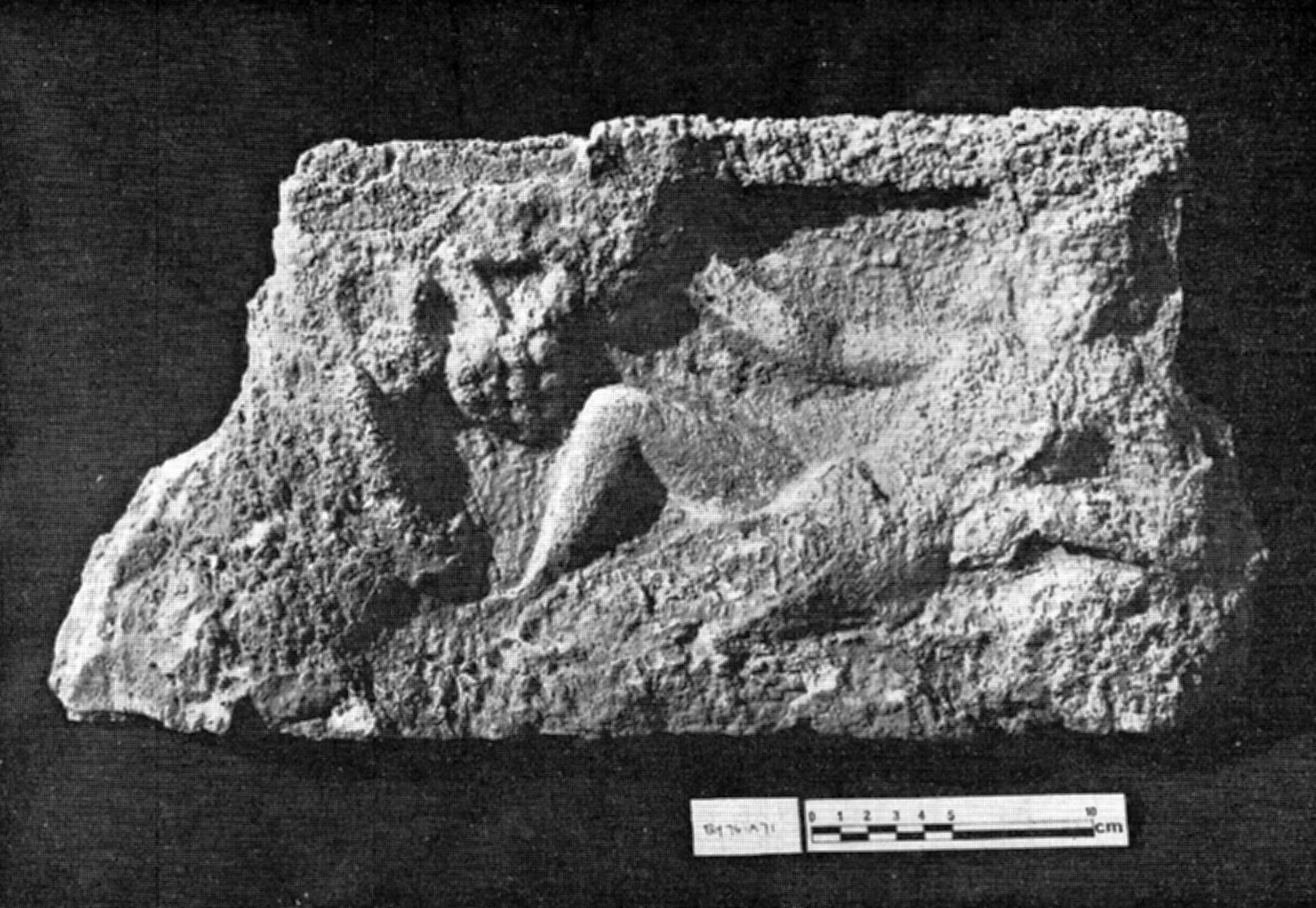
 Photograph courtesy of The Royal Ontario Museum
Description: Qalʿa ye Yazdegerd. Stucco decoration. Reclining male figure. Excavation no. QY 76.A71
Source: Courtesy of The Royal Ontario Museum. See also Keall E. J. 1977. 'Qual'eh-i Yazdigird: the question of its date.' Iran 15: pl. Ic
Terms of Use: For any reuse of the image explicit authorization must be obtained from Edward J. Keall and The Royal Ontario Museum
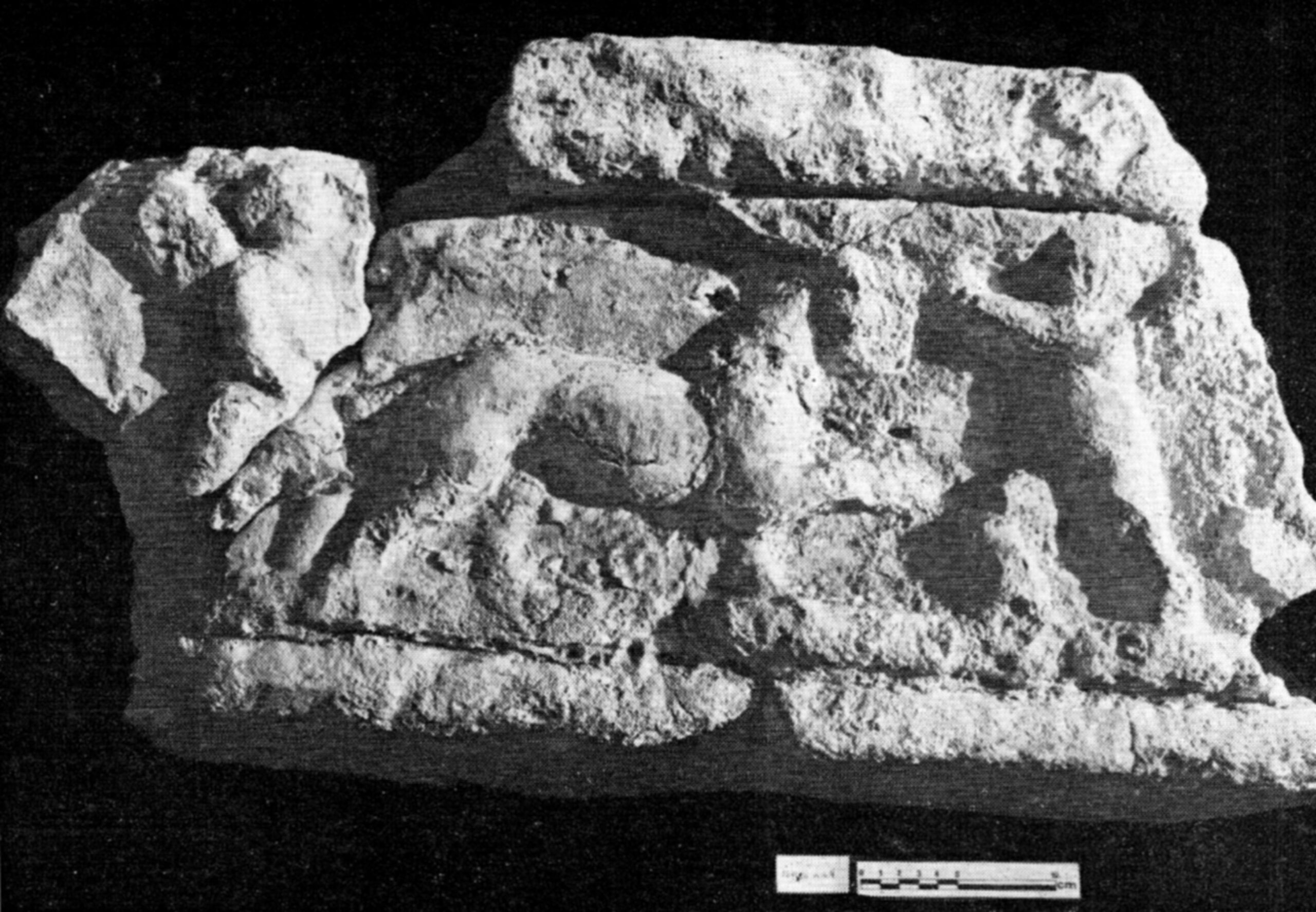 Photograph courtesy of The Royal Ontario Museum
Description: Qalʿa ye Yazdegerd. Stucco decoration. Winged youths sporting with feline. Excavation no. QY 76.A49
Source: Courtesy of The Royal Ontario Museum. See also Keall E. J. 1977. 'Qual'eh-i Yazdigird: the question of its date.' Iran 15: pl. Id
Terms of Use: For any reuse of the image explicit authorization must be obtained from Edward J. Keall and The Royal Ontario Museum
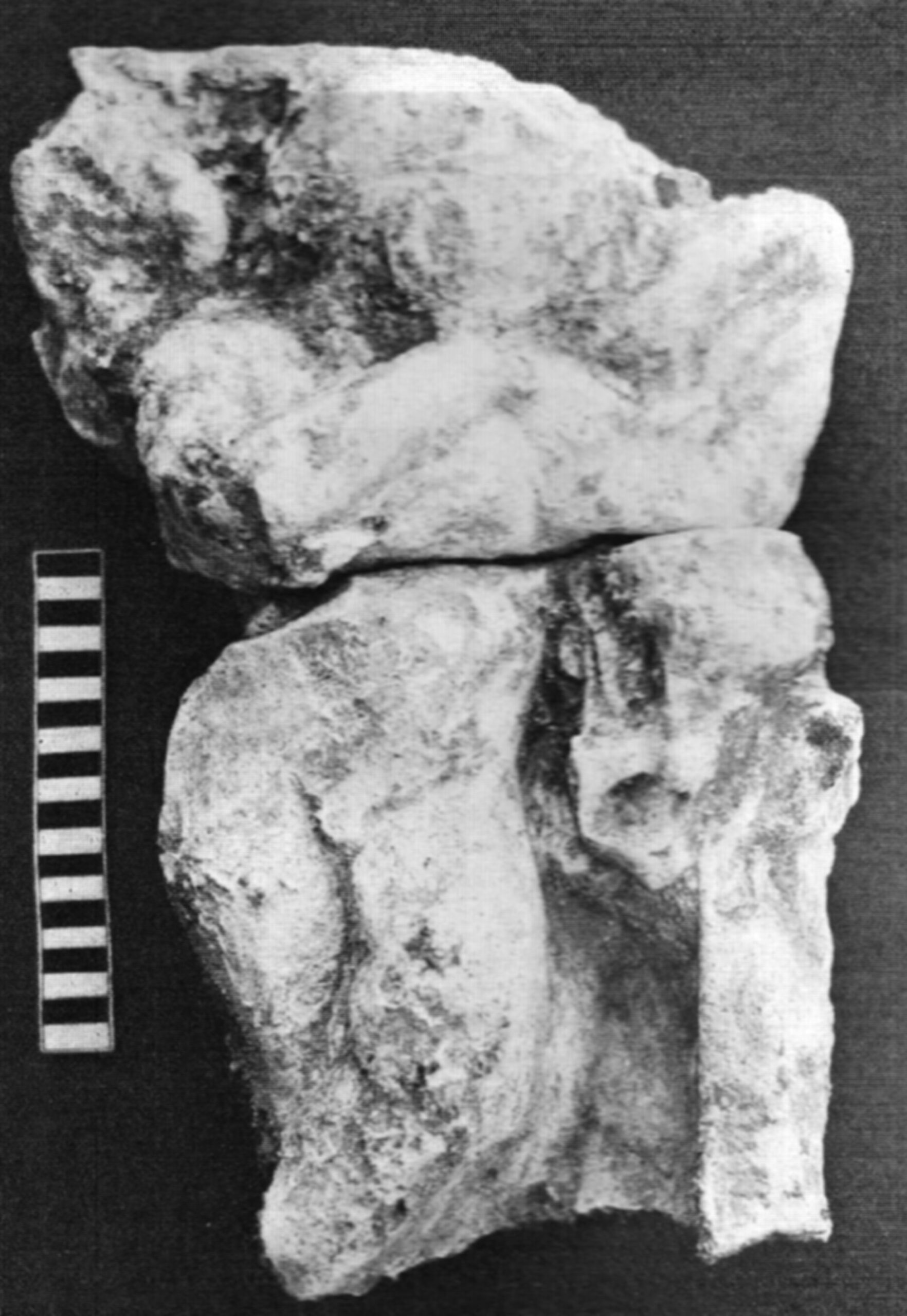 Photograph courtesy of The Royal Ontario Museum
Description: Qalʿa ye Yazdegerd. Stucco decoration. Standing nude figure (winged), leaning on a pedestal. Excavation no. QY 65
Source: Courtesy of The Royal Ontario Museum. See also Keall E. J. 1977. 'Qual'eh-i Yazdigird: the question of its date.' Iran 15: pl. IIb
Terms of Use: For any reuse of the image explicit authorization must be obtained from Edward J. Keall and The Royal Ontario Museum
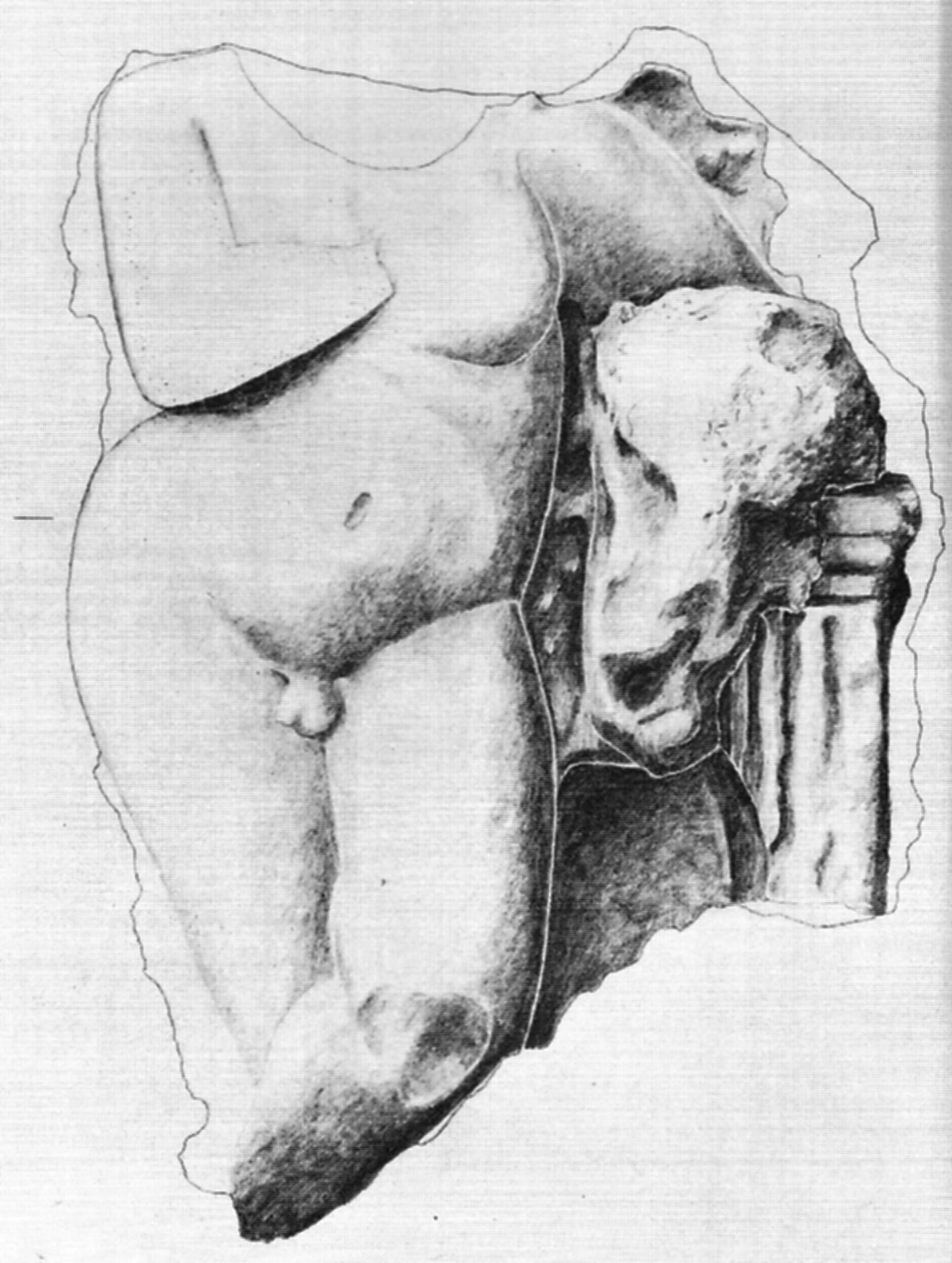 Drawing courtesy of The Royal Ontario Museum
Description: Qalʿa ye Yazdegerd. Stucco decoration. Standing nude figure, leaning on pedestal. Excavation no. QY 76.A48
Source: Courtesy of The Royal Ontario Museum. See also Keall E. J. 1977. 'Qual'eh-i Yazdigird: the question of its date.' Iran 15: pl. IIc
Terms of Use: For any reuse of the image explicit authorization must be obtained from Edward J. Keall and The Royal Ontario Museum
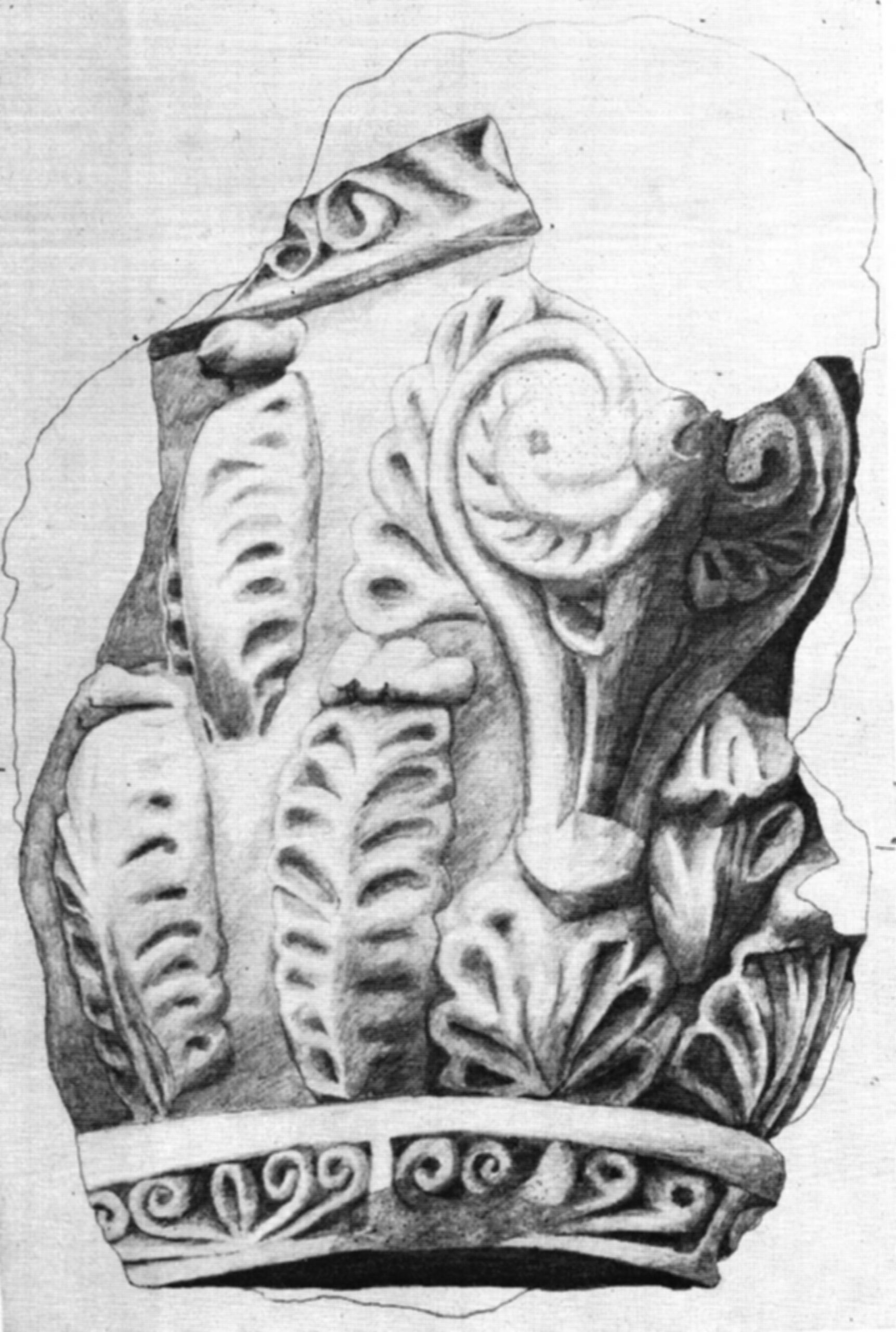 Drawing courtesy of The Royal Ontario Museum
Description: Qalʿa ye Yazdegerd. Stucco decoration. Corinthian capital. Excavation no. QY 76.A75
Source: Courtesy of The Royal Ontario Museum. See also Keall E. J. 1977. 'Qual'eh-i Yazdigird: the question of its date.' Iran 15: pl. VIIIc
Terms of Use: For any reuse of the image explicit authorization must be obtained from Edward J. Keall and The Royal Ontario Museum
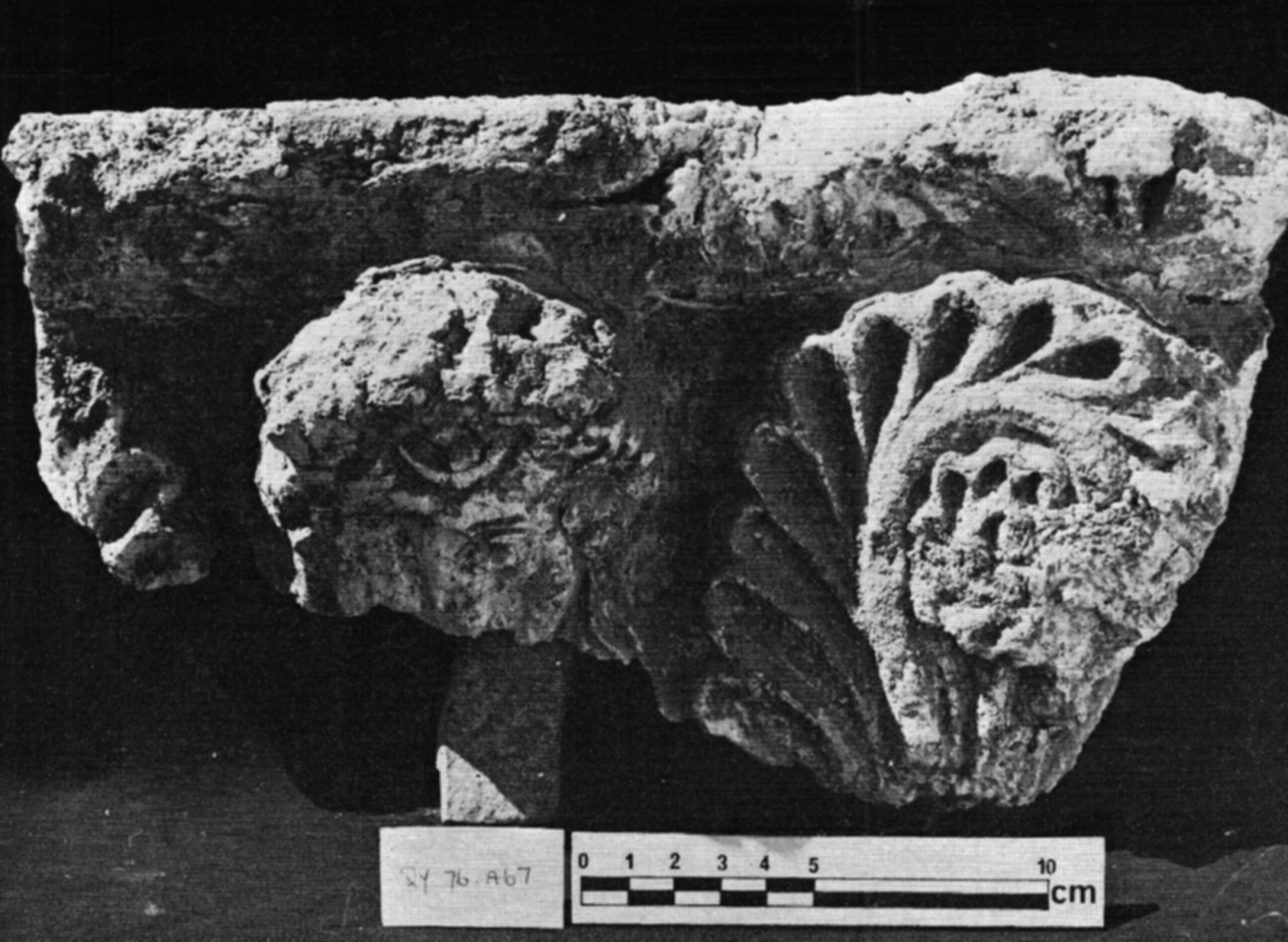 Photograph courtesy of The Royal Ontario Museum
Description: Qalʿa ye Yazdegerd. Stucco decoration. Corinthian capital with human head. Excavation no. QY 76.A67
Source: Courtesy of The Royal Ontario Museum. See also Keall E. J. 1977. 'Qual'eh-i Yazdigird: the question of its date.' Iran 15: pl. IXb
Terms of Use: For any reuse of the image explicit authorization must be obtained from Edward J. Keall and The Royal Ontario Museum
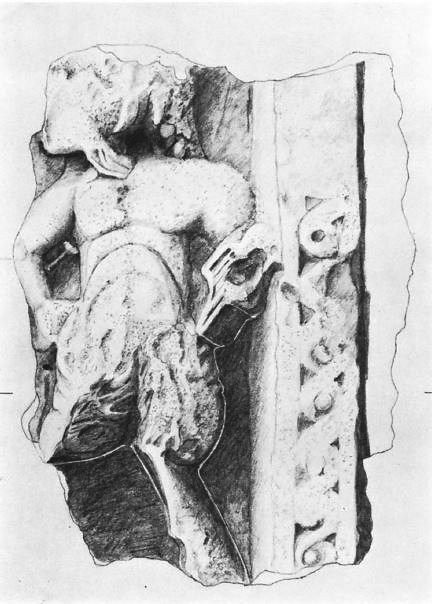 Drawing courtesy of The Royal Ontario Museum
Description: Qalʿa ye Yazdegerd. Stucco decoration. Column of dancing figures, Pan. Excavation no. QY 76.A88
Source: Courtesy of The Royal Ontario Museum. See also Keall E. J. 1977. 'Qual'eh-i Yazdigird: the question of its date.' Iran 15: pl. XIa
Terms of Use: For any reuse of the image explicit authorization must be obtained from Edward J. Keall and The Royal Ontario Museum
Western motifs in Parthian architectural gypsum stucco decoration. Pavilion at Qaḷʿa-ye Yazdegerd (Sector Gach Gumbad), Kermānšāh province, Iran. Late second or third century AD. Excavations of E. J. Keall, 1965 (British Institute of Persian Studies) and 1975-1979 (Royal Ontario Museum).
Boardman, J. 1994. The Diffusion of Classical Art in Antiquity. The A.W. Mellon Lectures in the Fine Arts, 1993. Bollingen Series XXXV:42. Princeton.
Herrmann, G. 1977. The Iranian Revival. Oxford.
Keall, E. J. 1977. 'Qalʿeh-i Yazdigird: the question of its date.' Iran 15: 1-9.
——. 1982. 'Qalʿeh-i Yazdigird: an overview of the monumental architecture.' Iran 20: 51-72.
——. 2002. ''Qalʿeh-i Yazdigird.' In Les Parthes. Dossiers d'Archéologie no. 271: 64-71.
Keall, E. J., Leveque, M. A. and Willson, N. 1980. 'Qalʿeh-i Yazdigird: its architectural decorations.' Iran 18: 1-41.
Mathiesen, H. E. 1992. Sculpture in the Parthian Empire. A Study in Chronology. Aarhus.
Simpson, St J., Ambers, J., Verri, G., Deviese, T. and Kirby, J. 2012. 'Painted Parthian stuccoes from southern Iraq.' In Matthews R. and Curtis, J. (eds.), 7th International Congress on the Archaeology of the Ancient Near East, 2010, the British Museum and UCL. London: 209-220.
Cite this entry:
Zournatzi, A. 2016. 'Qalʿa-ye Yazdegerd: Stucco decoration with western motifs.' In Mapping Ancient Cultural Encounters: Greeks in Iran ca. 550 BC - ca. AD 650. Online edition, preliminary draft release. Available at https://iranohellenica.apogee.dev/catalogue/qal-a-ye-yazdegerd/documents/stucco-decoration-with-western-motifs/
The carved and/or molded gypsum stucco decoration of the Late Parthian period pavilion at Qaḷʿa-ye Yazdegerd displays a mixed iconography that comprises western, Iranian and other Near Eastern motifs. A detailed description of this luxurious decoration and its archaeological context is offered in a series of publications by the excavator, Edward Keall, whose commentaries are cited in the select examples presented here. (See, e.g., Keall 1977; Keall et al. 1980; Keall 1982: 61-71, pls. XI-XVI, figs. 9-20; idem 2002. See also Herrmann 1977: 67-72; Mathiesen 1992: 177-182; Boardman 1994: 86.)
In Room 1 of the complex, the scene of a reclining male figure, reaching for a bunch of grapes from a vine and flanked by nude winged youths playing with a feline, has been compared with representations of Dionysus that feature his cupid companions and a panther (Keall 1977: 6, pl. Ic-d). In another instance, depicting an Eros resting its left elbow on a pedestal, both the figure's pose and the device of the pedestal refer to Roman stone sculpture (Keall 1977: 6, pl. IIb-c; Herrmann 1977: 72 color photograph).
Pillars in Room 5 were once crowned with Corinthian type capitals that find parallels in Seleucia on the Tigris and Uruk in Mesopotamia (Keall 1977: 7, pls. VIIIc, IXb; Herrmann 1977: 72 color photograph).
The decoration of the faceted columns on walls of Room 11 included a Pan figure with pipes (Keall 1977: 8, pl. XIa; Herrmann 1977: 71 color photograph).
Traces of paint (yellow ochre, green, violet, pink, blues and reds) were preserved on much of this ornamentation (Keall et al. 1980: 15-16 [Leveque, M. A. and Willson, N.]; Herrmann 1977: 67-72, with color photographs). Analyses of color traces on stucco decoration from Parthian period Uruk suggest that, at least in that Mesopotamian context, the Parthian palette of colors was closely interconnected with the one used in hellenistic art (Simpson et al. 2012).
In the case of Qaḷʿa-ye Yazdegerd, it is so far difficult to determine the extent to which the western classical motifs and devices attested in the decor of the pavilion were the work of western or local artisans, and whether they entered the Parthian artistic repertoire from the eastern Roman provinces or reflect a survival of hellenistic traditions in Mesopotamia and Iran (Keall 1977: 6, 8-9).