
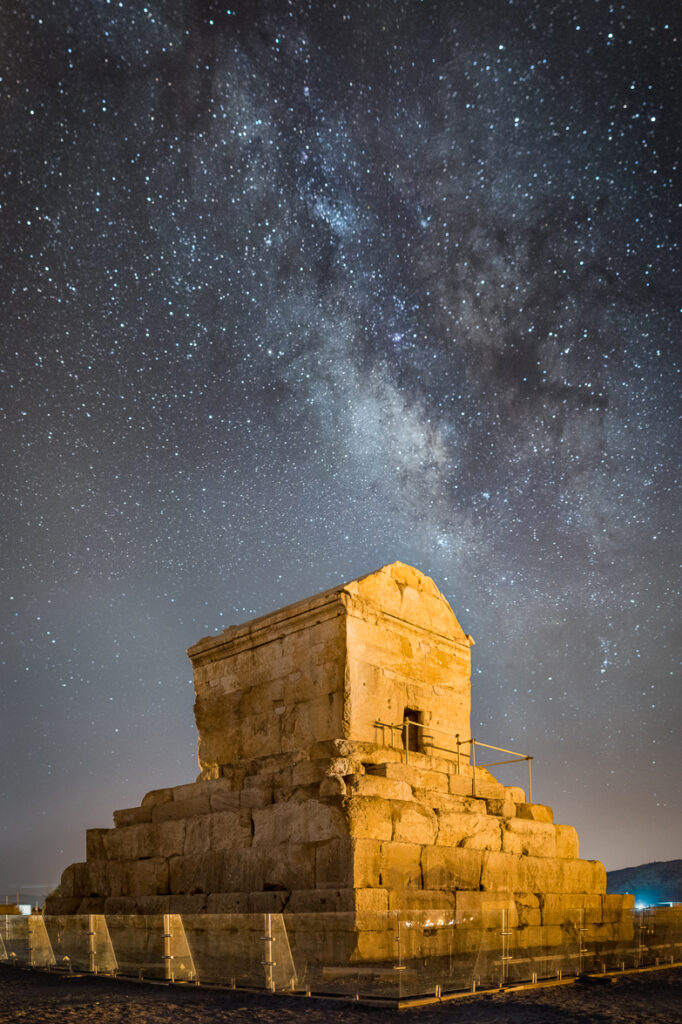
The tomb of Cyrus is generally identified with a small stone monument about 1 km southwest of the palaces of Pasargadae, on the Morḡāb plain. Greek sources place the tomb of Cyrus II (559–529 BCE) in the royal park at Pasargadae; the fullest ancient description survives in Arrian’s Anabasis (drawing on Aristobulus), with related notes in Strabo and Plutarch.
The standing monument—locally known as Mašhad-e Mādar-e Solaymān—is a gabled cella on a six-tier stepped plinth of carefully dressed ashlar, secured with dovetail clamps. Technical and stylistic parallels with Ionian and Lydian building practice of the mid-6th century BCE support an Achaemenid date in the reign of Cyrus, while its form also invites comparison with Mesopotamian, Elamite, and Anatolian funerary traditions.
This study entry summarises Antigoni Zournatzi’s Encyclopædia Iranica article on the subject. Full text, bibliography, and citation details:
CYRUS v. The Tomb of Cyrus — Encyclopædia Iranica (published 15 December 1993; last updated 29 August 2013).